
Naperville, IL 60563
Se Habla Español
Call Today for a Free Consultation
 630-448-2001


Can Field Sobriety Tests Be Thrown Out in an Illinois DUI Case?
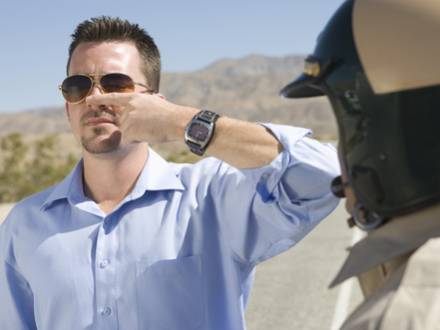 Field sobriety tests can be challenged, and in some cases, thrown out completely. If you've been charged with a DUI after failing one or more of these tests, you may be wondering whether those test results are really as damaging as the officer made them seem. The answer depends on how the tests were administered and whether the officer followed the rules.
Field sobriety tests have some known reliability issues, so results are far from a definitive measure of impairment. If you are facing a DUI charge in 2026, our Kane County, IL DUI defense lawyer can look at the details of your stop and help you figure out whether the test results should be used against you at all.
What Standardized Field Sobriety Tests Are Used in Illinois?
Illinois officers are trained to give three tests approved by the National Highway Traffic Safety Administration: the Horizontal Gaze Nystagmus test, the Walk and Turn test, and the One Leg Stand test. Together, these are called the Standardized Field Sobriety Tests, or SFSTs.
Under Illinois law, 625 ILCS 5/11-501.2, field sobriety test results can be used as evidence in a DUI case. However, the law also requires that the tests be given in substantial compliance with NHTSA standards. If they weren't, the results may be challengeable in court.
What Can Make a Field Sobriety Test Invalid in Illinois?
There are several reasons a field sobriety test can be questioned or thrown out. The most common include:
-
Improper administration: If the officer didn't follow protocol, including giving the right instructions, using a level surface, and watching for the correct number of clues, the results may not hold up.
-
Lack of proper training: Officers must be certified to give SFSTs. If the officer wasn't properly trained or their certification had lapsed, that could give you reason to challenge the results.
-
Medical conditions: Inner ear issues, leg injuries, neurological conditions, and certain medications can affect balance and eye movement in ways that look like impairment but aren't.
-
Environmental factors: Uneven pavement, poor lighting, loud traffic, and bad weather can all make it harder to perform these tests fairly.
Any one of these issues can be enough to raise serious doubt about the results.
Can the Traffic Stop Itself Be Challenged in a DUI Case?
Before a field sobriety test even comes into play, the officer has to have a legal reason to pull you over. Under the Fourth Amendment, a traffic stop requires reasonable suspicion that a law was broken.
If the officer didn't have a valid reason to stop you, your attorney may be able to ask the court to throw out everything that came from that stop. This includes the field sobriety tests, any statements you made, and any breath or blood test results.
If that motion is successful, it can change your case dramatically, sometimes leading to reduced charges or a dismissal.
Are Breath and Blood Tests Different From Field Sobriety Tests?
Chemical tests, such as breathalyzers and blood draws, are covered by a separate set of rules under 625 ILCS 5/11-501.2 and Illinois's implied consent law at 625 ILCS 5/11-501.1. These tests can also be challenged, but for different reasons. For example, you can challenge a breathalyzer that wasn't properly calibrated, or bring up problems with how a blood sample was handled.
A strong DUI defense often means considering both the field sobriety tests and any chemical test results, since both can have weaknesses worth challenging.
Schedule a Free Consultation With Our Aurora, IL DUI Defense Attorney Today
Failing a field sobriety test doesn't mean your case is already decided. These tests have real limitations, and how they're administered matters just as much as the results. Our Kane County, IL DUI defense lawyer will go through every detail of your stop, look at how the tests were carried out, and find every angle worth challenging. From the moment you were pulled over to how the evidence was collected, nothing gets overlooked.
If you've been charged with a DUI, don't wait to get help. Contact the Law Office of Patricia Magaña, LLC today. Call 630-448-2001 to schedule a free consultation. Se habla Español.


1555 Bond Street, Suite 103A, Naperville, IL 60563

Contact Our Firm
 The use of the Internet or this form for communication with the firm or any individual member of the firm does not establish an attorney-client relationship. Confidential or time-sensitive information should not be sent through this form.
I have read and understand the Disclaimer and Privacy Policy.